
A Living Landscape Designed to Feed People, Pollinators, and Place
Designing with Time
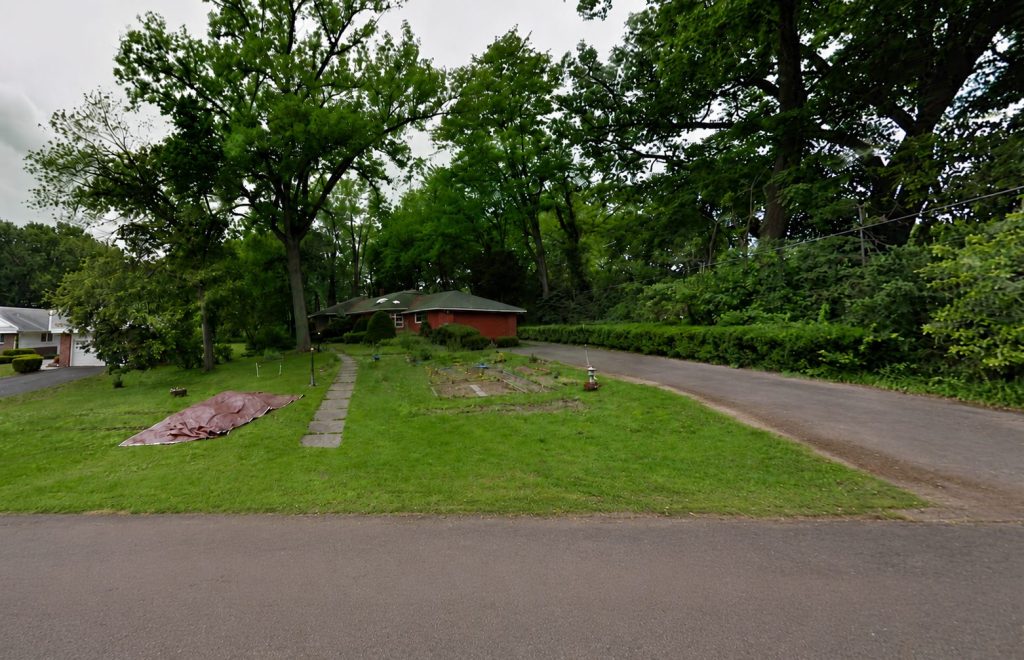
When we first stood on this property, it looked like countless suburban front yards across North America: an expanse of lawn beneath a magnificent canopy of mature oaks. It was beautiful in its own way, but it was largely passive. It consumed water, required mowing, and offered relatively little habitat or food for either people or wildlife.
We saw something different.
Rather than asking what could be planted, we began by asking what kind of place this landscape wanted to become—not just today, but twenty years from now.
One of the first conversations we had with the homeowner centered on patience. Like many projects, there was a budget. We could have spent a significant portion of it installing large specimen trees and mature evergreens that would have created an immediate visual impact. Instead, we proposed something different.
We would build for the future.
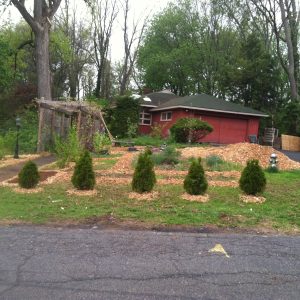 The landscape’s permanent infrastructure would come first.
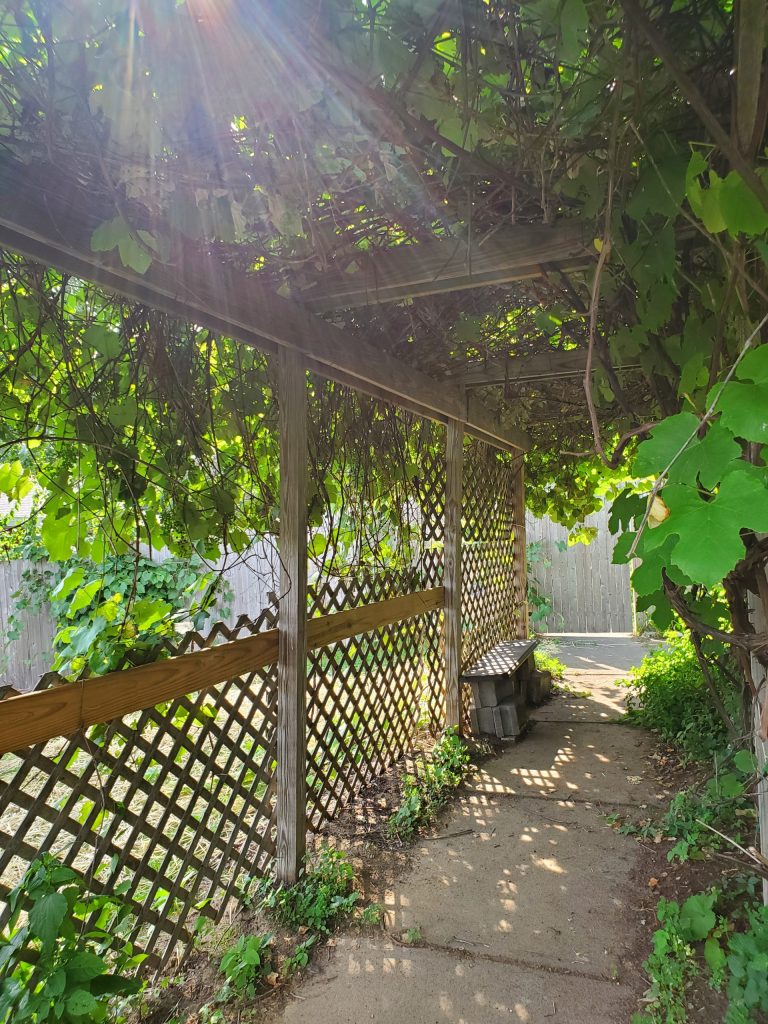
Before many of the plants even existed, we established the framework that would support them for decades: pathways that invited exploration, irrigation where needed, fencing, gathering spaces, herb spirals, productive garden beds, and an arbor that would one day disappear beneath grape vines. These were the bones of the landscape—the elements that become increasingly difficult to add once a garden matures.
The living systems would grow into that framework over time.
Working within the client’s budget, we planted relatively small arborvitae along the property’s edge. They were not intended to create privacy immediately. Everyone understood they would require nearly a decade to mature. That decision represented a tradeoff between instant gratification and long-term abundance. The homeowner chose patience.
Today, those once-modest evergreens have become a lush green backdrop that frames the entire landscape while providing privacy, wind protection, wildlife habitat, and visual depth. Looking back at the earliest photographs, it is almost difficult to believe they were once little more than waist-high saplings.
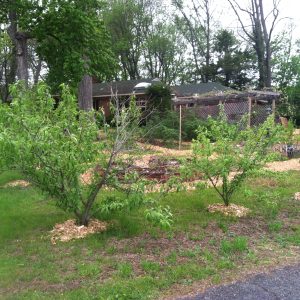
The arbor followed the same philosophy.
As soon as its structure was completed, grape vines were planted. For several years, the arbor remained mostly wood. Then the vines slowly climbed. Season after season they thickened, reached across the beams, and eventually transformed the structure into something entirely different—a shaded tunnel alive with birdsong, filtered sunlight, ripening grapes, and cool summer air. What had once been lumber became an experience.
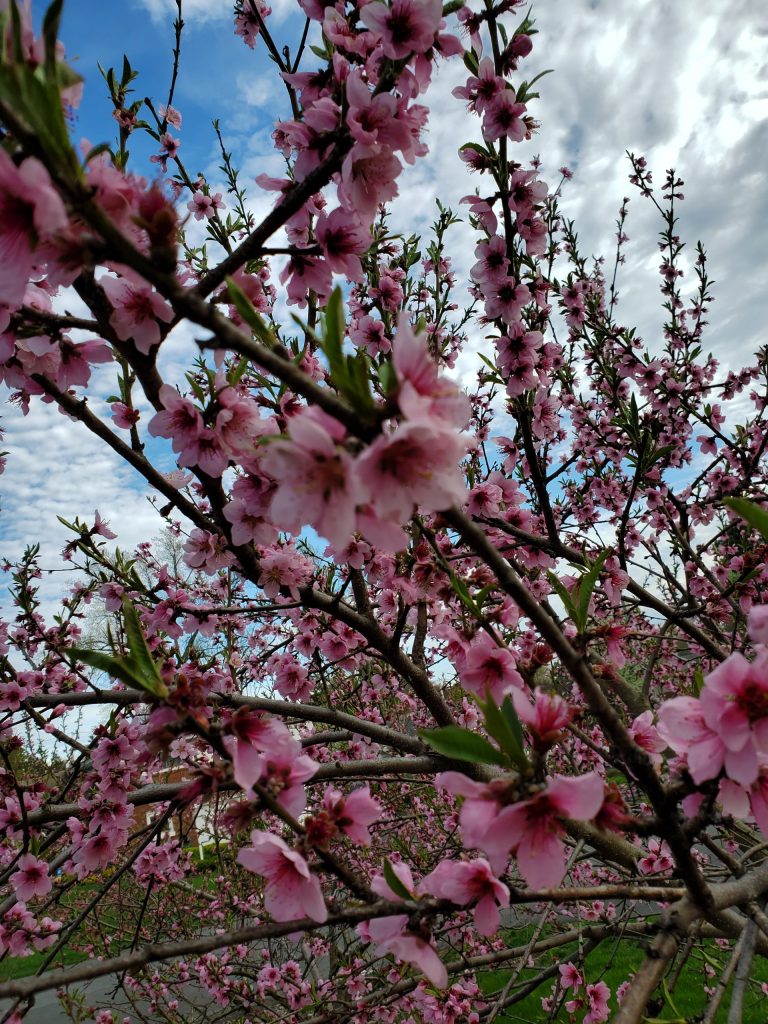 The fruit trees were positioned intentionally.
Rather than hiding them behind the home, we planted peaches, apples, pears, and other edible species where they would remain visible from the street, standing proudly in front of the evergreen backdrop. This was more than an aesthetic decision. It reflected a belief that food production can itself become an act of public beauty.
Every spring, neighbors now pass clouds of blossoms instead of ornamental shrubs. Throughout the summer, fruit slowly emerges among the leaves. By autumn, heavy branches announce abundance to everyone walking or driving by.
The landscape quietly asks a simple question:
Why shouldn’t our neighborhoods feed us?
Every decision served multiple purposes.
 The pathways encouraged wandering while reducing compaction around planting areas. The herb spirals maximized growing space while creating beautiful focal points. Grapes provided shade, habitat, privacy, food, and beauty simultaneously. Fruit trees produced harvests while feeding pollinators in spring, cooling the property in summer, and offering vibrant seasonal color in autumn.
Beauty and function were never competing goals.
They became partners.
Looking back through these photographs, I realize they are documenting far more than the construction of a garden.
They are documenting the unfolding of design decisions whose consequences would not become visible for years.
Tiny arborvitae became living walls.
Young grape vines became green architecture.
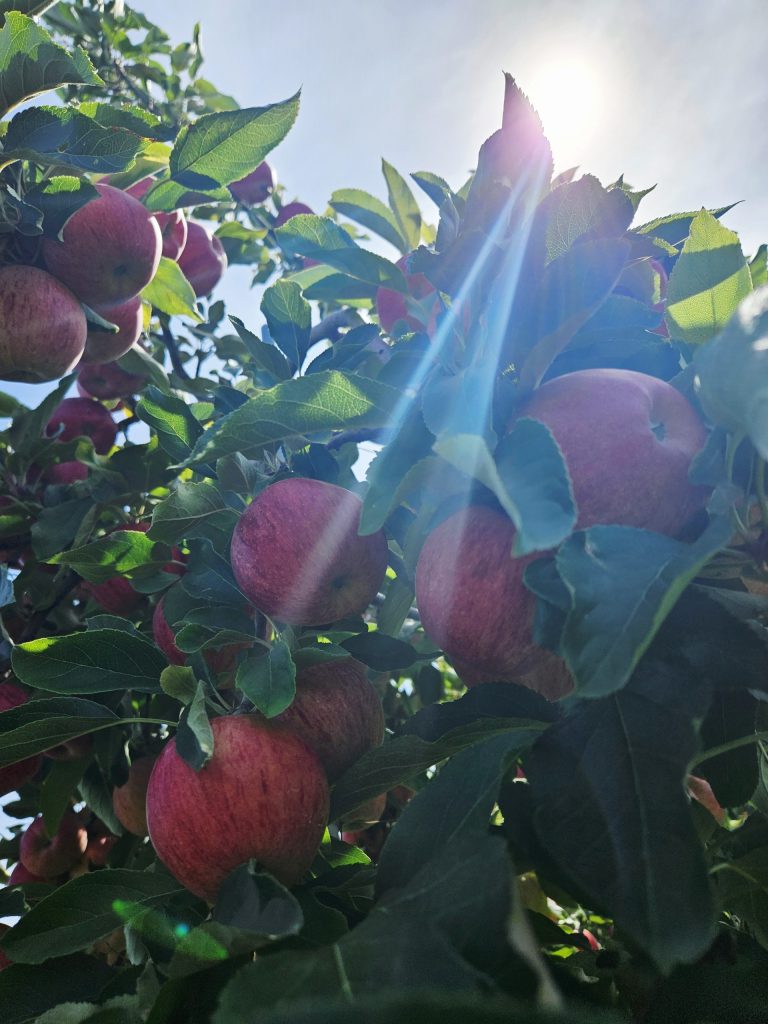 Peach saplings became spring blossoms and baskets overflowing with fruit.
Fresh wood chips slowly disappeared beneath thriving fungal networks and healthy soil.
What began as an ordinary lawn gradually became an ecosystem.
Perhaps that is the greatest lesson regenerative landscapes have to teach us.
Most conventional landscapes are designed to look finished on the day they are installed.
Regenerative landscapes are designed to become more beautiful with every passing year.
Time itself becomes one of the primary building materials.
Each season contributes something impossible to purchase: thicker trunks, richer soil, stronger root systems, more birds, more insects, deeper shade, greater harvests, and a growing sense that the landscape has always belonged exactly where it is.
Eventually something unexpected happens.
 You realize you are no longer maintaining a garden.
The garden has begun caring for itself—and, in many ways, caring for you.
The first blossoms become an anticipated ritual each spring. You notice when the bees arrive. You recognize which birds return with the ripening berries. You know exactly when the peaches will begin to soften, when the grapes will sweeten, and which apples are ready simply by walking through the landscape.
The garden becomes a calendar.
It becomes a teacher.
It becomes a companion.
And, perhaps most importantly, it becomes a place for people.
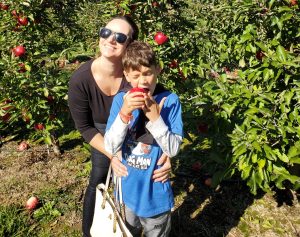
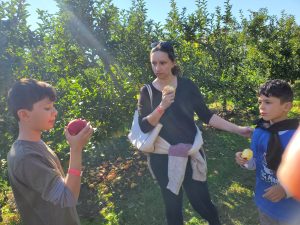
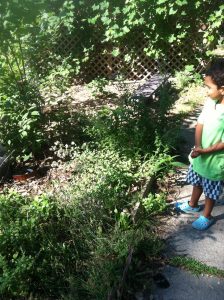 Children wander its winding paths, hide beneath grape vines, and learn that fruit does not originate in grocery stores but grows from living branches warmed by the summer sun. They snack on peaches and apples as naturally as previous generations once did, discovering that food can be something encountered while exploring rather than merely purchased.
Friends gather beneath the arbor during harvest season. Extra fruit is carried home in baskets, transformed into pies, preserves, jams, and gifts shared with neighbors. Grapes become stuffed grape leaves around family tables, fresh juice for children, and occasionally homemade wine enjoyed among friends. Harvest becomes less an act of production than a celebration of community.
The landscape also became home in another sense.
Songbirds nested in the trees and feasted on insects. Native bees, butterflies, and countless pollinators found nectar throughout the growing season. Chipmunks darted through the pathways carrying seeds. Squirrels harvested forgotten fruit. Groundhogs browsed the edges of perennial beds. The occasional deer wandered through at dawn. What had once been a relatively quiet suburban lawn gradually became a vibrant web of relationships, where humans were only one species among many benefiting from the abundance.
Not every peach belonged to us.
Not every grape needed to be harvested.
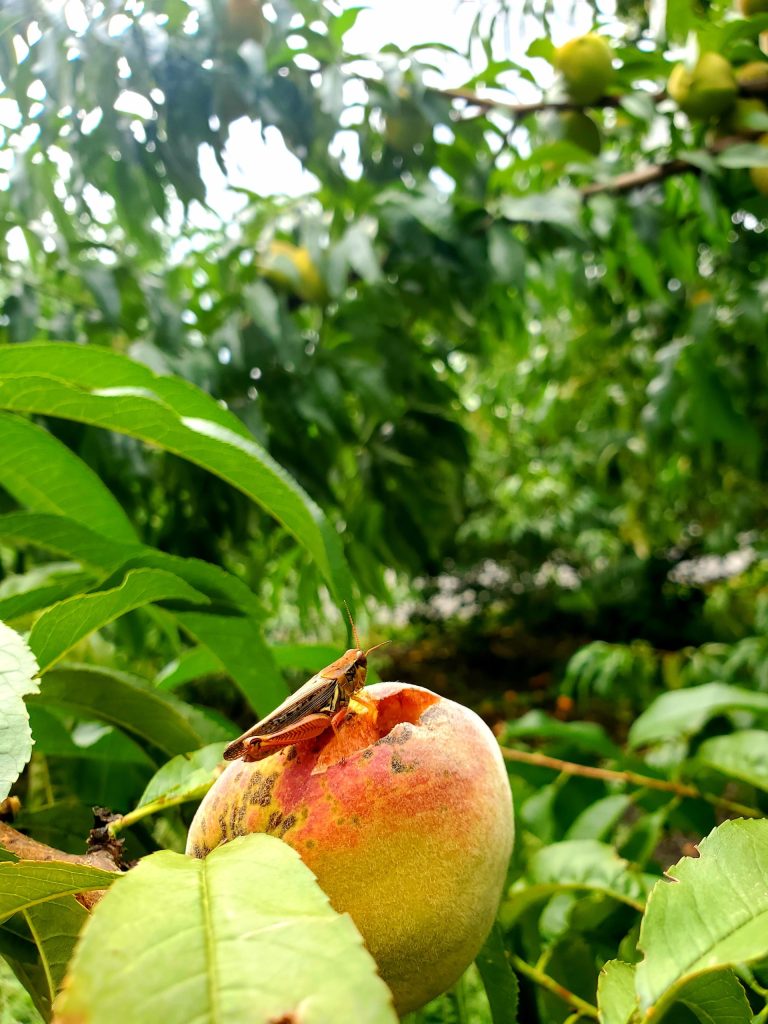 Some of the harvest was always left behind, because a truly regenerative landscape feeds an entire community of life.
Perhaps that is the deepest transformation these photographs reveal.
The project was never simply about creating a beautiful garden.
It was about creating the conditions for life to flourish.
For children to play.
For neighbors to gather.
For wildlife to return.
For soil to deepen.
For friendships to grow alongside grape vines.
For ordinary suburban space to become something extraordinary—not through extravagance, but through patience.
Because the most meaningful landscapes are not finished when construction ends.
They are just beginning.
 Every fruit tree is a promise to the future.
Every perennial is a conversation with seasons yet to come.
Every path invites another walk.
And every passing year writes another chapter in a story that no designer could ever complete alone.