

Principle 05
Materials that get better
Natural materials chosen because time improves them, not because they look new.
What it is
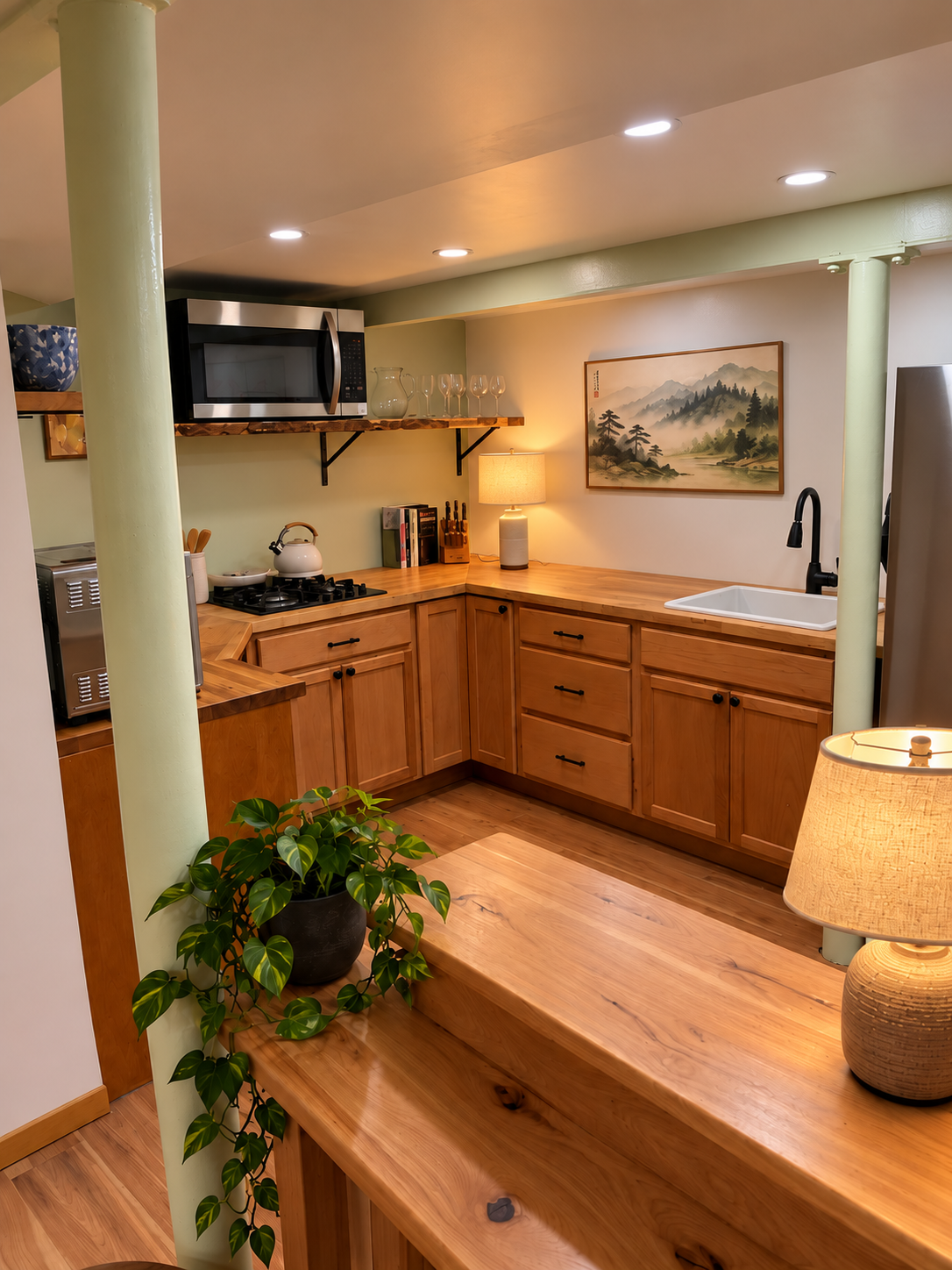
Almost everything in a modern house is at its best the day it’s installed. From there it heads slowly toward replacement. A small number of materials do the opposite. They start well and improve — absorbing use instead of recording damage.
Those are the ones we specify wherever the budget allows. Not out of sentiment. Out of arithmetic, over a long enough stretch of time.
Why it matters
Time isn’t the enemy.
It’s a material.
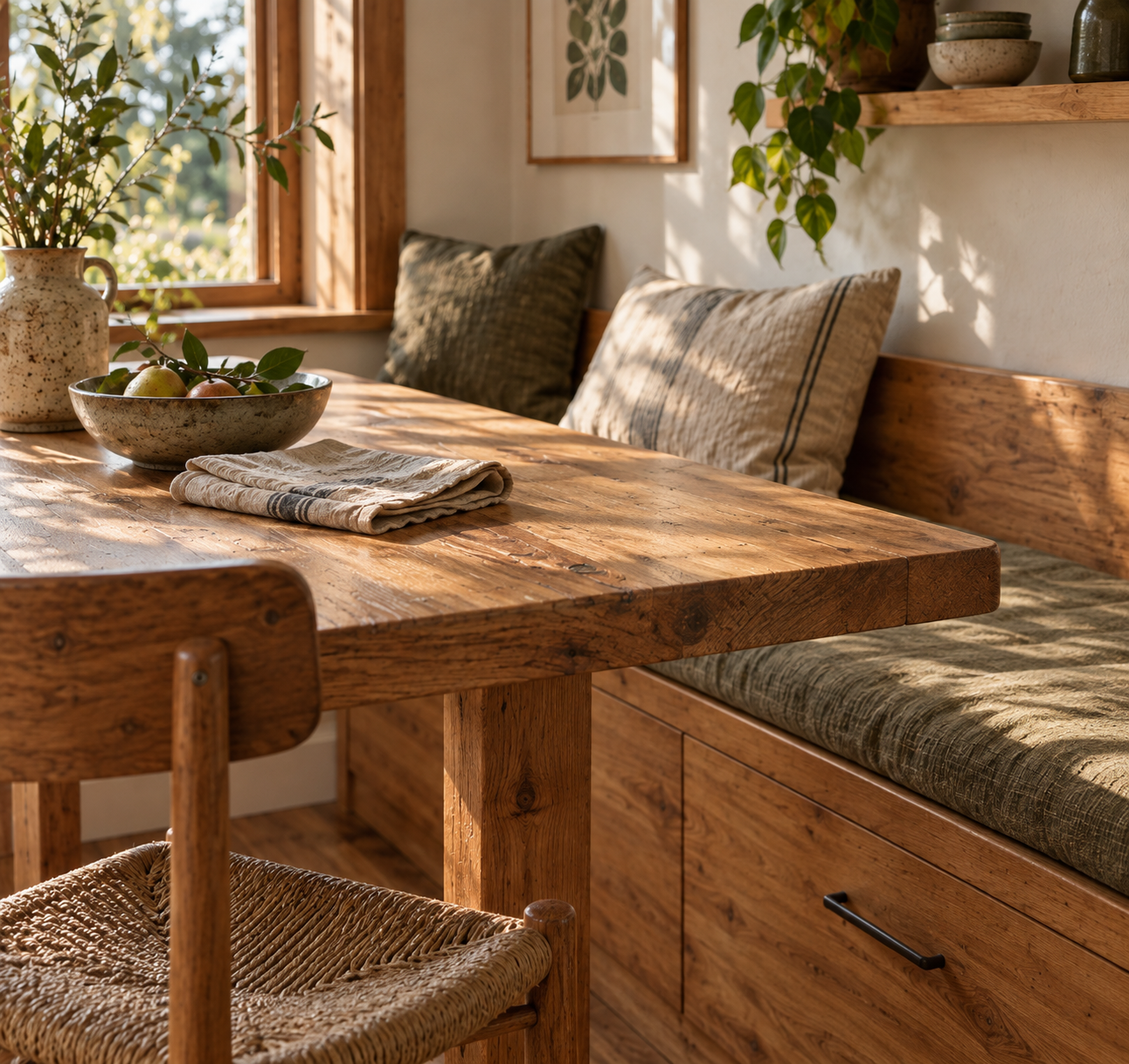
Solid wood darkens and deepens. Unlacquered brass and copper build a patina no factory finish can imitate. Linen softens every time it’s washed. Honed stone takes on a sheen exactly where hands and feet have passed.
Set that against vinyl plank, laminate, thin veneer. All serviceable. All cheaper on day one. All headed one direction. When they fail there’s no repair — only removal.
This is the clearest place our approach costs more up front. It’s also the clearest place it costs less by year fifteen. And the room in year fifteen isn’t a compromise. It’s the best that room has ever looked.
A mark in solid oak becomes part of the story. The same mark in a printed floor is just damage.
How we approach it
The natural materials we specify, and why
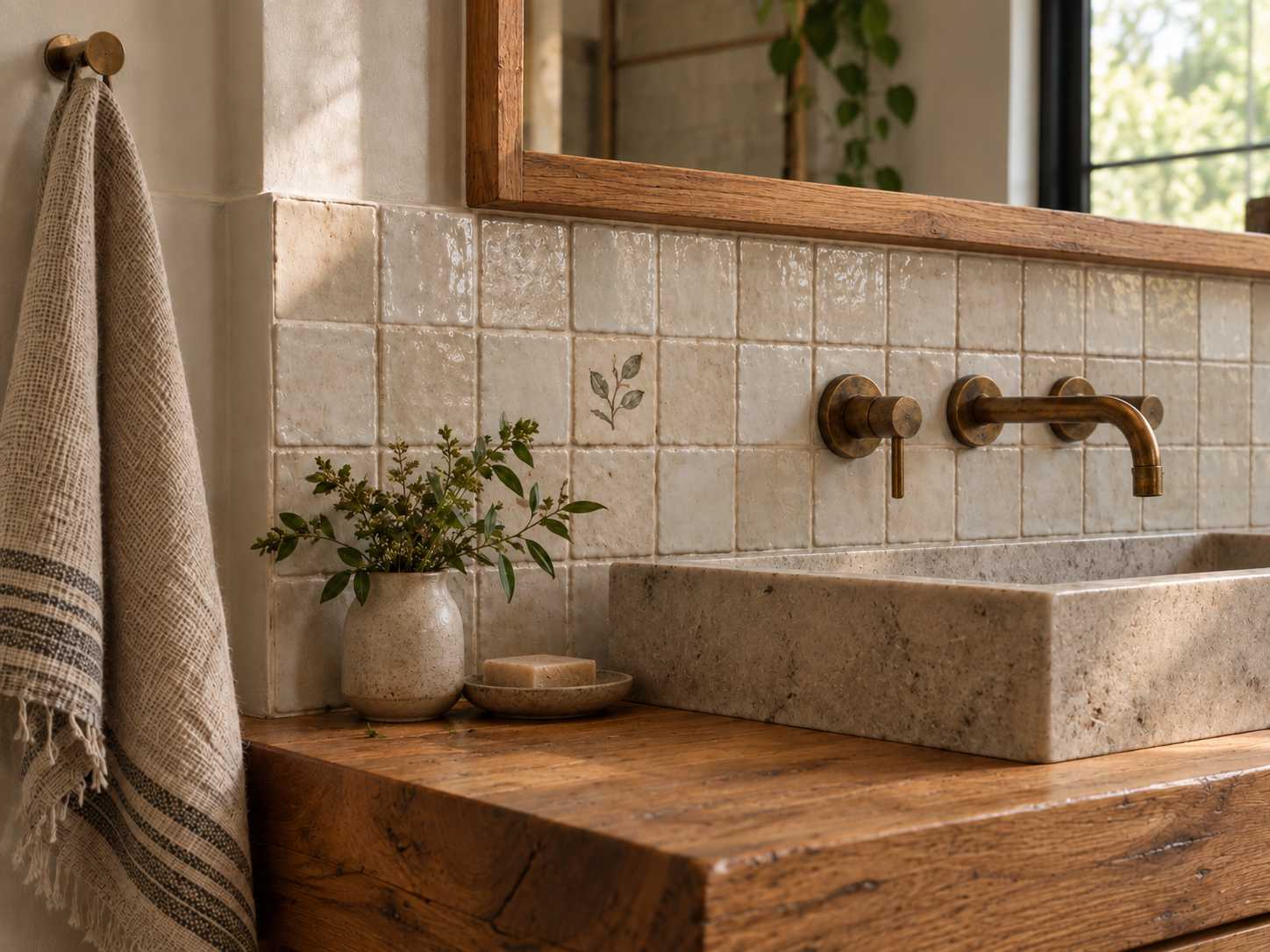
Solid and thick-veneer wood
Can be sanded, refinished, repaired. A floor you can bring back three times instead of tearing out once.
Honed and natural stone
Wears into a soft luster right where it’s used. A chip can be dressed rather than hidden.
Unlacquered metal
Brass, copper and blackened steel left to build their own surface, so fingerprints become finish instead of fault.
Natural textiles
Linen and wool get softer and hang better with age, and can be replaced without touching the cabinetry.
Commissioned work
A custom piece — a painting, a carved panel, a run of handmade tile — becomes part of a family’s story in a way a catalog item never does.
Continue reading
01
Biophilic Design
Not plants as decoration. Places designed to participate in living systems — and get more alive every year.
02
Japandi
Japanese discipline meets Scandinavian warmth — and why that combination suits a long winter here.
03
Japanese Design Principles
Wabi-sabi, ma, shou sugi ban — and what a garden in Kyoto teaches a bathroom in Delmar.
Materials, built
See it in one house
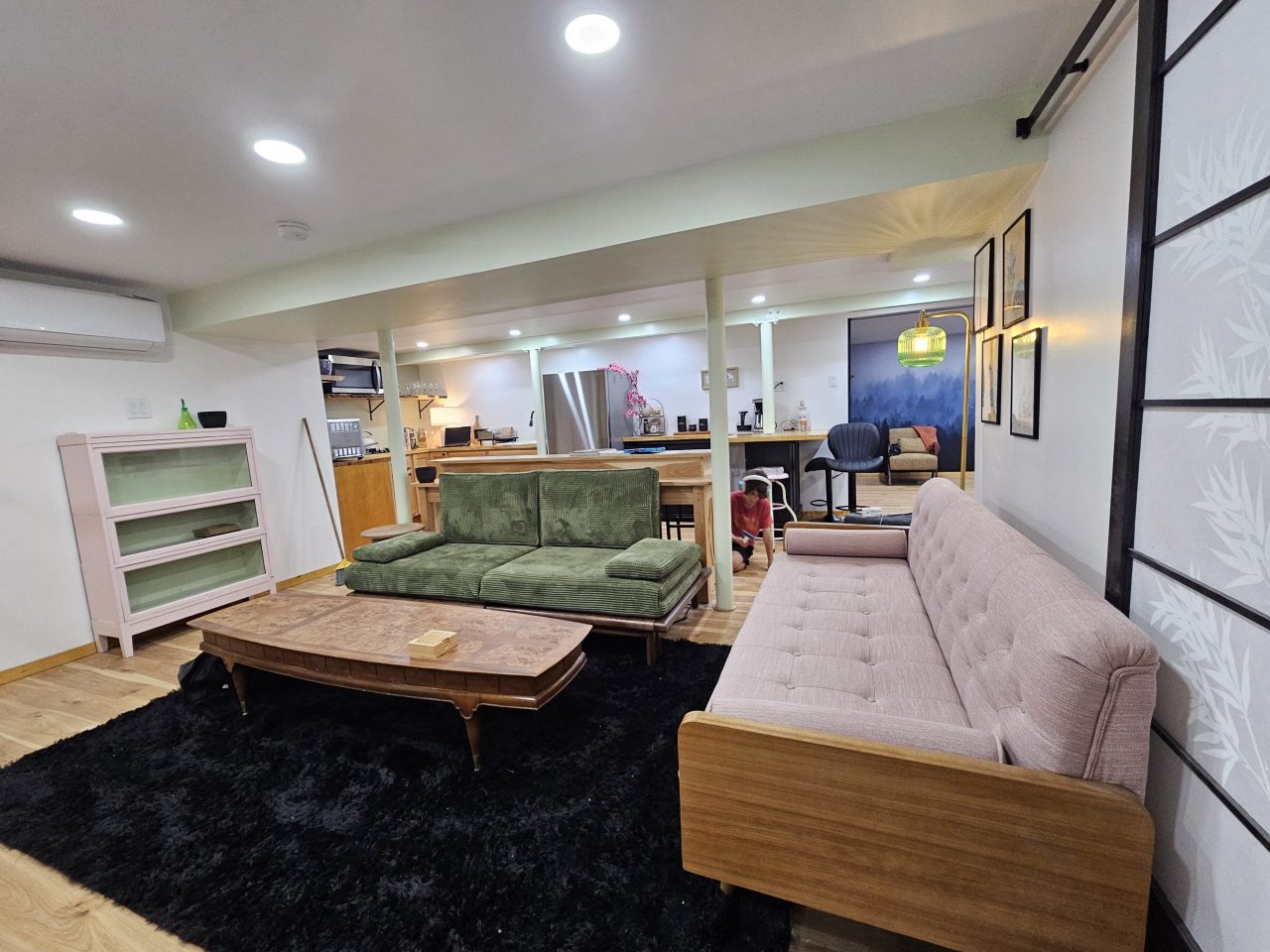
Custom-stained butcher block, live-edge shelving, and an antique cabinet cut and rebuilt around a structural column so it reads as a built-in.
An unfinished basement — steel, block and bare slab — became a whole apartment. Walk it room by room and drag the handle on any photo to see what was there before.
See the kitchen